
Visualizing Social Networks
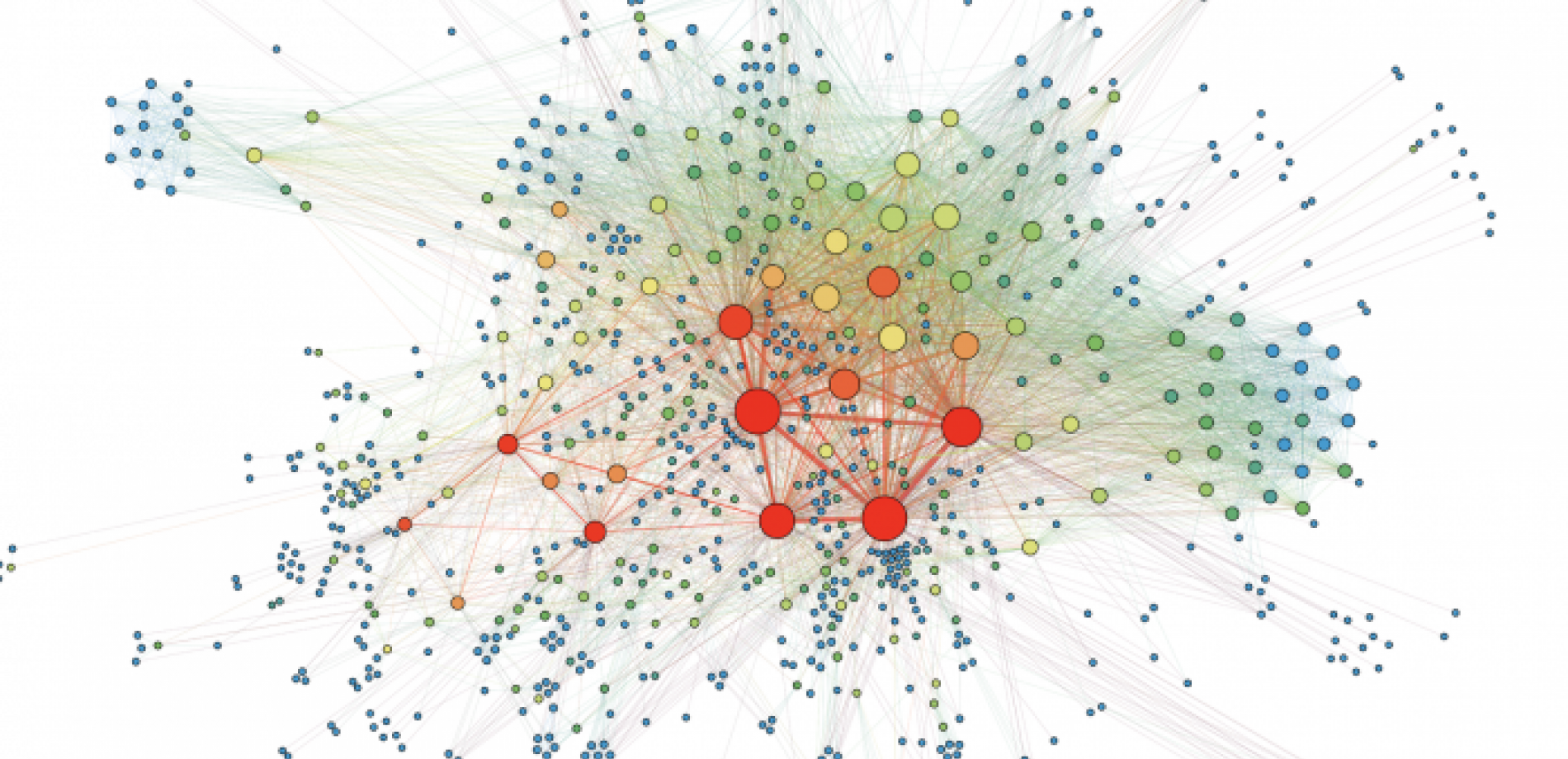
In this project-based course, you will be given an opportunity to learn how to collect social network data from digital platforms and design social network graphs. Visualizations of social networks provide crucial insights into the cultural dynamics of online communities. The research skills which you can acquire during mini-research projects are invaluable to media studies and digital anthropology.
The aim of the project
The overall aim of this course is to experiment with techniques of visualizing social networks and to understand how network visualizations can inform strategies for campaigns on digital platforms.
The main learning goals for project participants include:
- to increase data literacy
- to distinguish between different theoretical perspectives of social network analysis
- to become familiar with the basic vocabulary of social network analysis
- to learn how social network data can be retrieved from the Application Programming Interfaces (APIs) of digital platforms
- to learn the central procedures for “cleaning” social network data
- to learn how to design insightful network graphs with cutting-edge network visualization software
- to understand the different stages of managing a mini-research project
Group members
Kirjandus-, visuaalkultuuri ja filmiteooria (2)
Informaatika (1)
Sotsiaalne ettevõtlus (1)
Digitaalsed õpimängud (1)
Extra information about referencing and rights
When referencing project outcomes, the APA7 citation system is used.
If a work has more than 20 authors, the names of the first 19 authors are listed, followed by an ellipsis (...), and then the name of the final author. If there are fewer than 20 authors, the names of all authors are listed.
Group members
Informaatika (1)
Kommunikatsioonijuhtimine (3)
Organisatsioonikäitumine (1)
Extra information about referencing and rights
When referencing project outcomes, the APA7 citation system is used.
If a work has more than 20 authors, the names of the first 19 authors are listed, followed by an ellipsis (...), and then the name of the final author. If there are fewer than 20 authors, the names of all authors are listed.
Group members
Kommunikatsioonijuhtimine (1)
Poliitika ja valitsemine (1)
Reklaam ja suhtekorraldus (1)
Rakendusinformaatika (1)
Rahvusvahelised suhted (1)
Avatud ühiskonna tehnoloogiad (1)
Extra information about referencing and rights
When referencing project outcomes, the APA7 citation system is used.
If a work has more than 20 authors, the names of the first 19 authors are listed, followed by an ellipsis (...), and then the name of the final author. If there are fewer than 20 authors, the names of all authors are listed.
Group members
Digitaalsed õpimängud (1)
Informaatika (2)
Poliitika ja valitsemine (1)
Avatud ühiskonna tehnoloogiad (1)
Extra information about referencing and rights
When referencing project outcomes, the APA7 citation system is used.
If a work has more than 20 authors, the names of the first 19 authors are listed, followed by an ellipsis (...), and then the name of the final author. If there are fewer than 20 authors, the names of all authors are listed.